bari studio

Follow us on Twitter Find us on Facebook Find us on YouTube Find us on Pinterest Find us on Instagram

Trainer Talk-C

trainer talk: at-home stretch props
method-tribe

Cool down at the end of a bari class feels like a big sigh of relief. You worked for it. You made it. You deserve it. And it feels really, really good. While it’s our job to stretch you out after every sweat session, taking the initiative to give your body a little extra TLC on your own time will help your muscles recover more quickly, thereby enhancing your practice. Not sure how to stretch it out on your own? Getting creative with makeshift stretching props will allow you to access deeper stretches, leaving your muscles limber, happy and ready to work for you. Re-purpose these common home items into stretch props for a simple and effective at-home stretching routine.

the prop: belt

Belts can work as an extension of your arms to help stretch muscles you can’t normally reach with your hands (think hamstrings!) You can also use them to measure progress by seeing how much slack you have below where your hands are holding. As your slack increases week to week, you’ll know that you muscles are holding less tension!

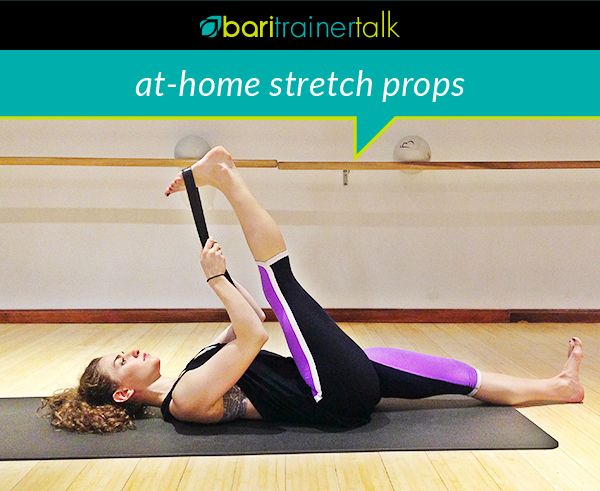
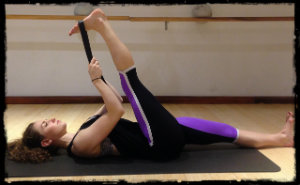
the stretch: hamstring stretch
kara 1
1. Lie down on your back, and place the belt on the ball of your foot.
2. Gently pull the leg towards you while keeping your hips and opposite leg on the floor.

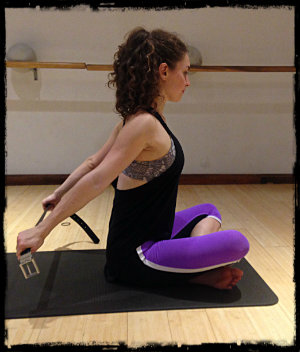
the stretch: chest opener
kara 2
1. While sitting Indian style, hold the belt behind your back with your palms facing down.
2. Lift your hands up while you pull the belt apart, and you should feel your chest open. Make sure to keep your shoulders down!

the prop: pillow or towel

Pillows and towels can be used interchangeably to support the body and aid in relaxation. With pillows, try different shapes and firmness levels to see what feels best for your body. With towels, try rolling them in different ways to see how malleable or firm they can be in different positions.

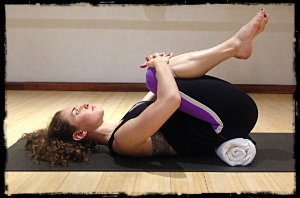
the stretch: lower back stretch and support
kara 3
1. Lie on the floor, and place a pillow or a rolled up towel under your tailbone (not under your lower back! No need to arch your back and crunch your lower vertebrae). Your hips should be higher than your ribs.
2. Pull your knees into your chest to feel the lower back release.
Want a hip opener? Keep your hips where they are, and let your knees fall open to the side.

the stretch: chest opener

kara 2
1.Lie on your back and place it a firm pillow (a bolster shape is good for this) or a rolled up towel between your shoulderblades.
2. Open your elbows to the sides, in line with your shoulders, and feel your chest muscles stretch and release.
Form note: Make sure you don’t splay your ribs or arch your back!

the prop: sports balls

Not for the paint of heart, lacrosse and tennis balls are the perfect at-home tools for self-myofascial release. Use these for massaging any sore or tight muscles.

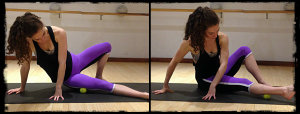
the stretch:
kara 5
1. Lie down and place the ball underneath your tight muscle. Roll in all directions until you find the sweet spot of muscle pain. Deep breathe and roll until you feel the muscle release.
Form notes: If rolling on the floor feels awkward or is causing too much tension in other muscles, try placing the ball against a wall and rolling there. We recommend rolling the IT band, calf muscles and Achilles tendon, butt and upper back (in between the shoulder blades).

the prop: bag of dry beans or grains

Use these items like you would a weighted sandbag. They can help the body release unwanted tension and aid in relaxation.

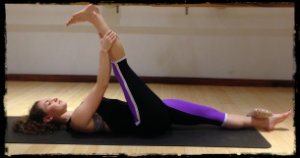
the stretch: hamstring stretch
kara 6
1. Lie down on your back and bring your right leg towards you.
2. Place the weighted item over your left ankle to anchor down your inactive leg while stretching.

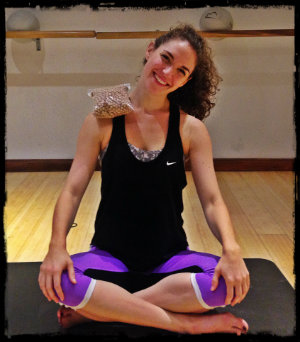
the stretch: shoulder release
kara 7
1. Place on shoulders as to release tension.

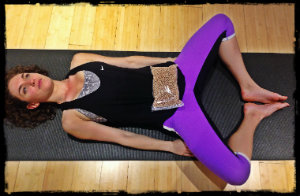
the stretch: pelvic awareness
kara 8
1. Lie on the floor, bring feet together and let knees open wide.
2. Place weighted bag on pelvis to relieve menstrual cramps, find lower abdominal engagement or open your hips.
Leave a comment...
9-10 Moves Trampoline

bari moves for killer legs: uneven lunge
method-tribe

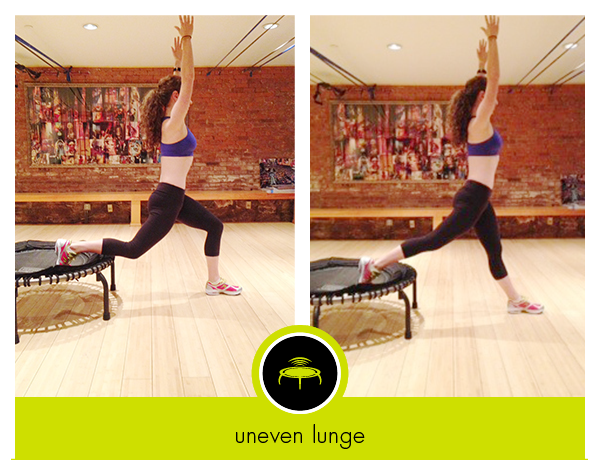
Ready to sculpt those coveted Bari legs? In our Bari Moves for Killer Legs series, we’ll break down the moves that make the lower body magic happen. Meet the Uneven Lunge.

uneven lunge
This move is a standard lunge, trampoline style.

Here’s how to do it:

1. Step to the left side of the trampoline and face left. Place your right foot behind you on the trampoline, and reach your arms to the ceiling.
2. Simultaneously bend your knees to come to a lunge position. Your left knee should be on top of your left heel with your weight in that same heel. Your hips are tucked underneath you, and your core is engaged. You’ll most likely feel a stretch in your right hip flexor. (You’ve gotta love a little stretch when there’s a whole lot of burn about to happen.)
3. Push off the left heel to engage your glute and hamstrings and straighten both legs.

why the uneven lunge?
“Why not?” is the real question. Having your back leg on a raised surface will help you stretch your hip flexor while also working the opposite leg, so you’ll feel stretching and strengthening happening all in one exercise. The unstable surface of the trampoline forces you to engage your core on a deeper level while balancing mostly on the left leg.

nailed it?
Try moving from the bottom of the lunge to a balance with the back leg extended behind you.

Want more Bari moves for killer legs? Catch up on our past moves: running on the trampoline, trampoline squat, dynamic balancer and step up balance.

Leave a comment...
11-12 Moves Trampoline

bari moves for killer legs: side fly
method-tribe

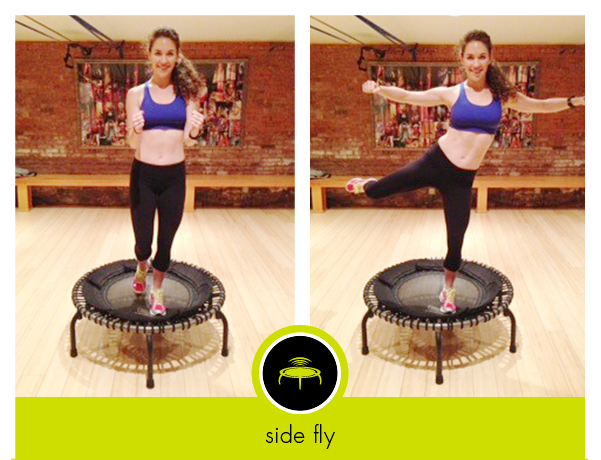
Ready to sculpt those coveted Bari legs? In our Bari Moves for Killer Legs series, we’ll break down the moves that make the lower body magic happen. Meet the Side Fly.

side fly
So you look fly — from the side.

Here’s how to do it:

1. Bend both knees and balance on the left leg. Your arms are in a bicep curl in front of your body, and your core is engaged.
2. Lift the right leg to the side so your knee is in line with your hip and simultaneously open your arms to a fly position. You will feel your body weight shift slightly to the left side, but try to stay as upright as possible. Keeping this upright stance will help you engage your left stabilizing leg and your right oblique along with the right glute that’s already lifting the leg.
3. Lower your leg back to your starting position, trying to hold the balance on your left leg the entire time.

why the side fly?
This move works your legs, butt and abs all at once. That unstable trampoline surface is yet again helping you engage the stabilizing muscles of your supporting leg, so even though it’s not moving there’s a lot of action going on in those muscles just to keep you balanced.

The working leg is lifting to engage the outer glute and outer thigh. When you stand upright the whole time, you’ll feel your working-side oblique firing to help your leg lift higher. That means those sexy oblique lines start to appear as the legs tone up.

nailed it?

  • Add weight to your arms or legs or both. [Insert evil laugh.]
  • Start in your Side Fly, then try to keep your balance while rotating to the Dynamic Balancer. Bonus points if you keep your leg at the same height the whole time while staying upright.

Want more Bari moves for killer legs? Catch up on our past moves: running on the trampoline, trampoline squat, dynamic balancer, step up balance and uneven lunge.

Leave a comment...

bari moves for killer legs: step up balance
method-tribe


Ready to sculpt those coveted Bari legs? In our Bari Moves for Killer Legs series, we’ll break down the moves that make the lower body magic happen. Meet the Step Up Balance.

step up balance
This move combines an off-set squat and a balance to tone the legs while also elevating your heart rate.

Here’s how to do it:

1. Stand to the left side of your trampoline with your right leg on the trampoline. Find a squat position.
2. Once you’re at the bottom of your squat, push off both heels, pull your abs in and transfer your weight to your right leg. At this point, you’re going to simultaneously kick your left leg to the side and find your balance on your right leg.
3. Once you’ve held your balance for a moment, land back into your squat position. Make sure you roll through your foot, land with a bent knee and control your movement on the way down. Moving between the off-set squat and the balance should feel fluid. As you’re moving through the two positions, you should start to feel that oh-so-lovely burn in the legs and butt.

why the step up balance?
You could perform these moves on their own and you’d still work your legs and butt. Put them together, and you have an even more dynamic, compound movement that challenges your core for balance, glutes for power and stabilizing leg muscles. Yes, please! The Step Up Balance also helps you get your heart rate up by using the larger muscle groups while moving from a low platform to a higher one.

nailed it?
Add a jump on your single leg to increase muscular and cardio intensity.

Want more Bari moves for killer legs? Catch up on our past moves: running on the trampoline, trampoline squat and dynamic balancer.

Leave a comment...
5-6 Moves Trampoline

bari moves for killer legs: dynamic balancer
method-tribe

Ready to sculpt those coveted Bari legs? In our Bari Moves for Killer Legs series, we’ll break down the moves that make the lower body magic happen. Meet the Dynamic Balancer.

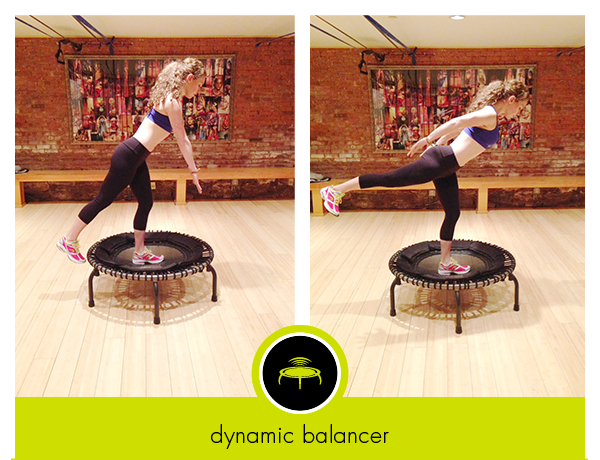
Dynamic Balancer
This move works your legs while simultaneously scorching your glutes.

Here’s how to do it:

1. Start with your feet together in the center of the trampoline and bend your knees. Even though this is a one-legged movement, starting in the right position on two feet will set you up successfully for what’s to come.

2. Transfer the weight to your left leg (still bent!) and kick your right leg behind you. Before you move the leg, get the upper body set up correctly: pull your abs into your spine so your lower back is long, press your shoulders down and reach energetically through your arms.

3. Lift your right leg as high as you can while keeping your upper body in that same alignment, and press your arms back to your hips. You should feel the right glute working, your left leg stabilizing (read: burning) and core engaging. You’ll even get a little tricep action if you squeeze your shoulder blades together and energetically press your arms up.

Why balance dynamically?
Once again, the trampoline shows us that we’re a little too comfortable on terra firma. The uneven and unstable surface allows you to work the stabilizing muscles more intensely since only one leg is taking all the balanced weight. Adding the lifting leg movement challenges that balance and core engagement even further by adding dynamic movement.

Nailed this move?
Try adding weights to your arms or legs (or both!) to increase the intensity.

Want more Bari moves for killer legs? Catch up on our past moves: running on the trampoline and the trampoline squat.


Leave a comment...
3-4 Bari Moves Trampoline

bari moves for killer legs: trampoline squat
method-tribe

Ready to sculpt those coveted Bari legs? In our Bari Moves for Killer Legs series, we’ll break down the moves that make the lower body magic happen. On the trampoline agenda this week? The beloved squat.

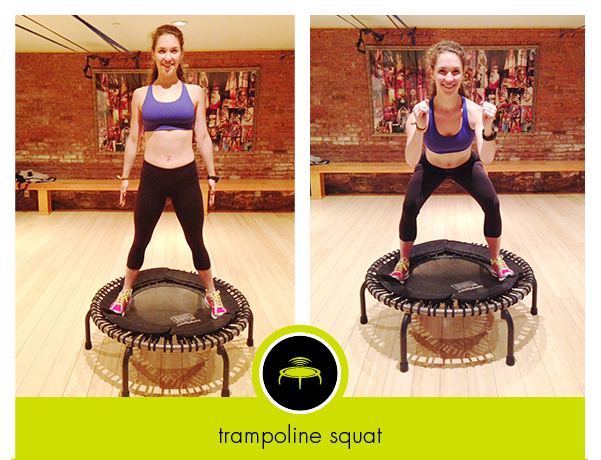
Trampoline Squat
This move is great for your butt, hamstrings, quads and leg stabilization.

We know, we know — you’ve done squats a million times. But get ready — adding the trampoline into the mix is the perfect way to shake up this traditional exercise. Regardless of whether or not you’re on a trampoline or the floor, remember these things about your squat form.

1. Start with your feet slightly wider than your hips. In this case, just as wide as the trampoline mat.

2. Simultaneously bend your knees, hinge at your hip and pull your abs in. This is the base of your squat, and the most important part. Your weight should be in your heels with your knees on top of your ankle and your abs pulled in so much that your back is at a flat diagonal. Feel your core pulling up and away from your thighs.

3. To straighten out your legs, press into your heels, squeeze your butt underneath you and pull your abs in a little deeper. It’s this simultaneous movement and focus of the weight in your heels that will help you feel the work in the back of your legs and butt. Transferring your weight to your toes will only have your work your quads and build muscle there. No, thanks!

Why squat on the trampoline?
Because the trampoline is an unstable surface, you have to constantly adjust your balance and weight distribution as you move to from the standing position to the bent knee position. While you’re checking in on that alignment, you’re working the small stabilization muscles of your legs along with the major, prime mover muscles.

Feel like you’ve mastered the trampoline squat? Kick it up a notch by adding a jump. Try to land your jump back in a squat position while controlling the bounce on the trampoline. You’ll get all the lower body benefits of the regular trampoline squat with an added cardio punch.

Want more Bari moves for killer legs? Catch up on last week’s move.

Leave a comment...
TTBari Cardio-5

Trainer Talk: Get the Most Out of Your Cardio
the-body

Did you catch our This Is Your Brain On Bari series? (If not, it’s really interesting stuff! Go read up on Part 1 and Part II.) We dug into how exercise - and specifically Bari’s cardio sequences - build a stronger, sharper brain. The takeaway? Cardio does the brain and the body good. Today, we’re providing you with a list of trainer-curated tips to make sure you’re getting the most out of your cardio experience at Bari.

Trust your trainer.
It’s our job to give you the best workout of your life - every single time. Beyond that, we love and take pride in doing this for you. As your trainers, we promise that we don’t just step into the studio, wait for inspiration to strike and improvise a class on the spot. (Our Bari brains are strong, but not that strong.) We work behind the scenes and in the studio to make sure we’re setting you, your body and your brain up for success. We plan our classes strategically, and we’re trained to make a Bari class accessible yet challenging for all levels. If you let us guide you through, we promise you’ll get a fun and sweaty workout every time.

Match your trainer’s energy.
Take class as if you were teaching class. Sure, we all have the days when it’s a struggle to even get out of bed — let alone bounce around at 100 percent for an hour. But, trust us, your body will thank you if you do! We’ve always had a hunch that our energy feeds our burn — that we sweat more and expend more energy during workouts when we’re really into it. So, we tested this hunch with our iQniter performance training system, and our research confirmed our hypothesis. If you take class with a more energetic and purposeful intention, you’ll reap the benefits of a better workout (a.k.a. you’ll burn more calories). This is a case where energy in and energy out are directly correlated. Step touch like you mean it!

Throw yourself into it.
Even the most coordinated people walk through our doors and ask, “I’m so uncoordinated. Will I be able to do this?” And our answer is always, always yes! Because you can. Any hesitation you have about your workout will only hinder your body and brain’s development and progress. So as the peeps at Nike would say, “Just do it.” Don’t sell yourself short because you didn’t perfect Rodeo the first time or because you were off the beat during your BOUNCE class. As with anything in life, Bari takes practice, and you’ll only feel more comfortable every time you do it.

Just keep moving. We don’t care if you mess up!
The flow of a Bari class keeps our minds engaged and in a strangely meditative state (despite the fact that there’s a stinging drop of sweat in your eye). This flow is what keeps you actively involved in the sensory learning process — while also allowing you to immerse yourself in the music-pumping, adrenaline-flowing workout atmosphere. Anything that breaks your groove will make it harder to jump back in. Even if you’re learning a new sequence for the first time or feel a little off your game on a certain day, just keep moving and you’ll push yourself through.

Understand the why behind your workout.
Ever wonder why we make you add that extra prop to an already challenging exercise or why a cardio sequence has, what seems like, particularly complicated footwork? Simple movements that build on one another to create compound and complex movements allow for multiple body parts to work in tandem; they simultaneously force your brain to use coordination to help your body work in a way it’s not used to. Moving in ways that aren’t typical in our daily lives allows us to create functionally-strong muscles and prevent the dreaded plateau.

Look for patterns.
There is a method to our madness. Try to look for movements that are repeated and movements that build on one another. In any cardio class, most movements will inevitably be brought back to build a larger sequence or act as a movement that connects the sequences. Hone in on what movements your body’s making, actively remember and embody them and by the end it will feel like you’ve put together a magic cardio puzzle.

Shall we put those bodies and brains to work, Tribe? Sign up for your favorite Bari cardio class — and rest sweat assured that you’re getting the most out of your workout.

Photos via Bari Studio

Leave a comment...

Trainer Talk: Inner Thighs
the-body

In our Trainer Talk sub-series, Muscle of the Moment, we feature some of your favorite (okay, maybe they’re just our favorite) Bari exercises and give you the inside scoop on which muscles these moves sculpt.

This week, we’re talking inner thighs. They can be worked in a million different ways, but one of our favorite methods of torture is the playground ball. Since talk is cheap, let’s show you two ways we love to scorch the inner thighs and sculpt those slender legs with the playground ball. (Warning: Performing these exercises may result in the desire to hang out in a sumo squat for an unusually long time after.)

Let’s begin with this basic (but still difficult!) inner thigh ball move:

  • Begin in starting position — Lie on your side with either your elbow stacked under your shoulder or your head lying on your arm (whichever feels best for your neck). The legs are long (ankles in line with your hips), and the ball is between your inner thighs.
  • Squeeze the ball by pulsing the inner thighs together. Seriously, squeeze the ball! Try to pop it. Do this at full capacity and you’ll feel how much the inner thighs should be working.
  • That’s one rep. Repeat 64 times.

What’s working? 
This exercise, though simple, targets the part of the inner thigh known as your adductor muscles. These are the muscles you engage in order to bring your legs together or to cross them. There are seven muscles total that work to create this action, but the most important ones to know are the adductor brevis, magus and longus (a short, a big and a long muscle that are prime movers for adducting the leg.)

Ready to graduate to the next level? Try this advanced ball exercise for your inner thighs:

  • Starting position is the same as the Basic Exercise.
  • Use your inner thigh and lower abs to lift the bottom leg off the mat. Squeeze the ball, and pulse the top leg down to the bottom one while keeping the bottom leg off the mat. Try to stabilize your hips, and don’t drop your bottom leg!
  • That’s one rep. Harder than it looks, right? Repeat 32 times. Other side!

What’s working? 
All of the same muscles as before, but the bottom leg is working harder to stay in place against the pressure of the ball and your top working leg. Your lower abs are holding tight so your hips aren’t swaying. You’ll feel the muscles get tired more quickly in this exercise.

Why work the inner thighs at all? Besides it being a part of achieving your #bariBODY, many people’s outer hips and thighs (abductors) are stronger than their inner thighs. Strengthening the inner leg makes your lower body more balanced and aligned. That means healthier joints that support your body!

As always, you’re welcome! ;)

Leave a comment...